
The Six States of New EnglandAs you will begin to observe while sampling the waterfalls in this region, each of the six New England states has its own unique beauties. A wide variety of experiences can be had as you move from state to state. As you will see below, the waterfalls of each of the six states offer the enthusiast great variety in hiking terrain, geological structure, biological environments, and water characteristics. WATERFALLS IN CONNECTICUTConnecticut’s limited mountainous topography tends to result in more seasonal falls. To ensure a flowing waterfall, it is best to plan your visit before the dry spells of summer. The months of March, April and May are your best bets.Approximately half the Connecticut waterfalls described in this guide are under the protection of the state park system or other nonprofit organizations, such as The Nature Conservancy. As a result, these waterfalls are often located in parks that also have picnic facilities, complete with picnic tables, bbq grills, bathrooms, and ample parking. The enforcement of state park rules and regulations has kept most areas well protected and very clean. 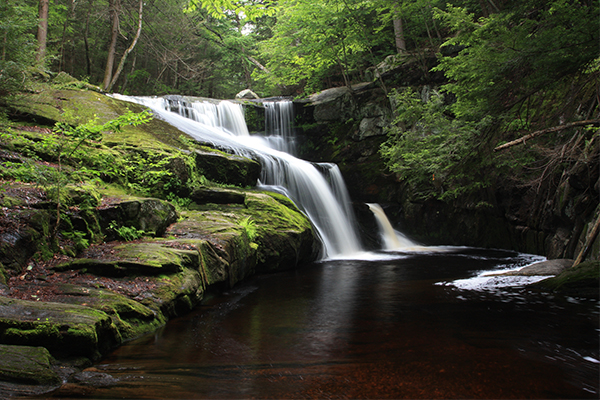 Enders Falls, Connecticut WATERFALLS IN MAINELarge sections of Maine remain relatively undeveloped. Vast expanses of wilderness can be found throughout the state, especially in the northern half. These wildernesses harbor dozens or even hundreds of remote waterfalls yet to be publicly documented or even discovered. The best chance for discovering your own private New England waterfall has to be in the state of Maine. Wildlife sightings are also more common in this state because of the lack of development.Expect long backcountry roads when reaching some of the trailheads in this state. Low-clearance vehicles may not be able to access the formal trailhead parking areas. Make sure to carefully read the driving directions before beginning any trip. Some waterfalls do not even have a trailhead; more than a dozen popular waterfalls in Maine are accessible only by canoe. These waterfalls were largely omitted from this guide, but I still recommend visiting them if you enjoy lengthy canoe, kayaking, or whitewater rafting trips. Maine may be the northernmost state of New England, but its swimming holes can still manage to warm to tolerable temperatures with the sun’s rays in summer. Some of these swimming spots are very popular, both with local residents and among visitors from other states. Some waterfalls require you to pay entrance fees. Public reserved lands, such as the KI Jo-Mary Multiple Use Forest, require a modest entrance fee. Baxter State Park, the home of Mount Katahdin and dozens of scenic waterfalls, also requires a fee for out-of-state residents. 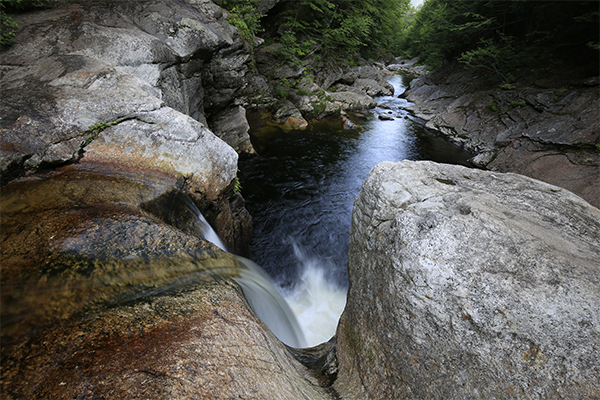 Frenchmen's Hole, Maine WATERFALLS IN MASSACHUSETTSHighly-rated waterfalls are few and far between in Massachusetts, making it difficult to visit more than two or three in a day. The Berkshire region, where the bulk of waterfalls in this state can be found, is your optimal location for visiting multiple waterfalls in a day.You will find very few waterfalls in this state with swimming holes below them. Also most waterfalls are either located within the state park system or managed by an organization. The Trustees of Reservation, a nonprofit group dedicated to “preserving the Massachusetts landscape,” has made a great effort to preserve several waterfall sites. They have succeeded well in their mission. 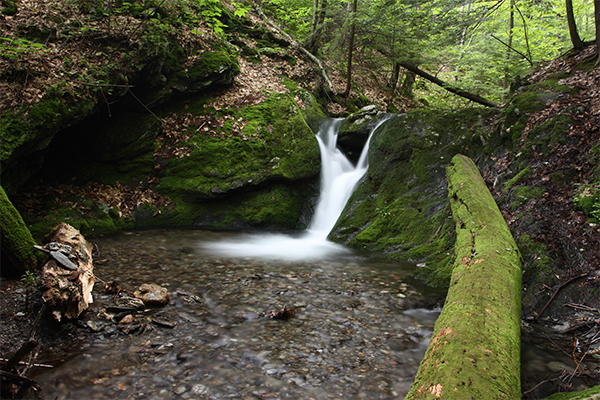 Lulu Cascade, Massachusetts WATERFALLS IN NEW HAMPSHIREIt is no surprise that the majority of waterfalls in New Hampshire are found in or near the White Mountain National Forest. The high peaks of the White Mountains create hundreds of permanent and seasonal waterfalls. Within the last decade the White Mountain National Forest adopted a per-car fee for many of the trailhead parking lots. This fee, $3 in 2009 (but is under review to be increased to $5) is used for maintenance of trails and roads, as well as related expenses. Other waterfalls in this region have become commercialized and are more costly to visit.Most of this guide’s longest and challenging hikes with the greatest elevation gains are found in New Hampshire. Unlike other states, many trips to waterfalls in New Hampshire can be extended by continuing farther on the trail to mountain summits, remote ponds and lakes, wilderness areas, and some of the finest scenic vistas in New England. New Hampshire also offers backpacking opportunities to camp adjacent to waterfalls. The state also offers some of the coldest waterfall swimming holes, colorful foliage, and some of the tallest waterfalls in New England. 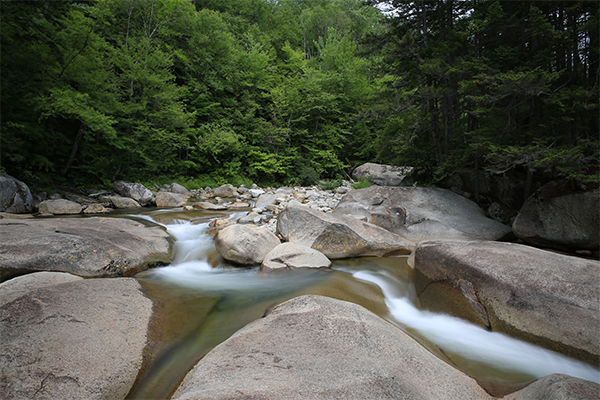 Franconia Falls, New Hampshire WATERFALLS IN RHODE ISLANDRhode Island is not gifted with waterfalls like the other states. Research indicates that Rhode Island only has one natural waterfall worthy of your attention. Perhaps there is still a natural waterfall or two to be discovered which may end up in future editions of this guide.WATERFALLS IN VERMONTAvid hikers looking for long-distance hikes may be left somewhat unsatisfied with the waterfall trips in Vermont; the majority of falls are roadside attractions or require hikes of less than 0.5 mile. The waterfalls in this state are most likely to please swimmers and those who are unable to hike long distances.Many of Vermont’s waterfalls have been partially altered or diminished altogether by dams created through hydroelectric projects and power stations. As a result, locals are actively protective of the waterfalls left in their natural state. The Vermont River Conservancy is one organization fighting to purchase and protect the lands that waterfalls are found on. They have succeeded in doing so on several projects so far and need the public's continued support. Vermont is home to the finest swimming holes known among New England’s waterfalls. Warm, refreshing, and clean, the swimming holes naturally attract a slew of visitors during summer months. The translucent emerald-green color, so familiar in tropical waters, creates lovely pools. Some even argue that Vermont has the greatest swimming holes in the entire nation! Always carry a bathing suit and towel; you will surely need them. 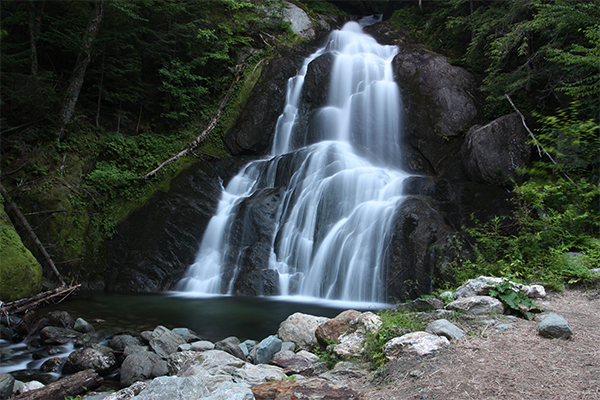 Moss Glen Falls, Granville, Vermont Connecticut / Maine / Massachusetts / New Hampshire / Rhode Island / Vermont Home Page / About the Book / Book Updates / Top 40 Waterfalls / Swimming Holes / How To Use This Guide / Contact Us Waterfall Photography / Top 25 New England Hikes / 4000 Footers of NH / Bigroads.com © newenglandwaterfalls.com photographs/images may not be used without permission |
| Waterfalls, swimming holes, and hiking can be extremely dangerous. Hundreds of people have been injured or killed in the waterfalls and swimming holes of New England over the years. Never swim in strong water currents. Don't jump into a swimming hole without scouting it first. Do not climb up or along the side of waterfalls. Be wary of slippery rocks. Never swim in pools above waterfalls. Use of this website and all of its information is at your own risk! Newenglandwaterfalls.com will not be held liable for your actions. Be safe out there - and always use common sense! As an Amazon Associates affiliate, this website contains affiliate links. If you choose to purchase any products after clicking any links, I may receive a commission at no extra cost to you. I only endorse products that I have personally used or come highly recommended by trusted peers. |